Shop & Hangar Safety
Personal Protective Equipment
Assess the hazard, inspect the gear, confirm the fit, then start.
THE 3 MODULESOne at a time, video and slides
- Hazard assessment first Pre-Task Hazard Assessment and PPE Fundamentals.
- Head, eye and hearing protection Head, Eye, Face, and Hearing Protection Operations.
- Gloves, respirators and fall arrest Hands, Respirators, and Fall Protection Systems.
YOU'LL BE ABLE TO4 things, on the job
- Evaluate the work zone.
- Select rated equipment.
- Inspect for degradation.
- Don and secure.
TEST YOURSELFA question from module 1
During the pre-task inspection for a short hydraulic servicing job, a technician finds a crack in the lens of the splash goggles. What does the course call for?
A Use them for this short task and replace them afterward.
Not quite. defective or damaged PPE shall not be used under any circumstances, because compromised gear can mean direct exposure to the hazard.
B Switch to safety glasses alone for the job.
Not quite. hydraulic servicing calls for splash goggles and a face shield, so safety glasses alone leave the splash hazard uncovered.
C Remove the goggles from service and use a sound, rated pair before starting.
Right. under 29 CFR 1910.132(e), defective or damaged PPE found during inspection must be removed from service immediately and never used.
D Keep using them as long as the crack does not block vision.
Not quite. a crack is damage, and the inspection takes any item with holes, cracks, tears or degraded material out of use.
Stuck? In the course, Crew Chief, your AI tutor, explains it.
HANGAR CARDUnlocks when you pass
Walk the zone first — the hazard you find picks the PPE.
| Number | What it means |
|---|---|
| 1 to 1¼ inch | suspension clearance, shell to head (OSHA guidance), maintained at all times |
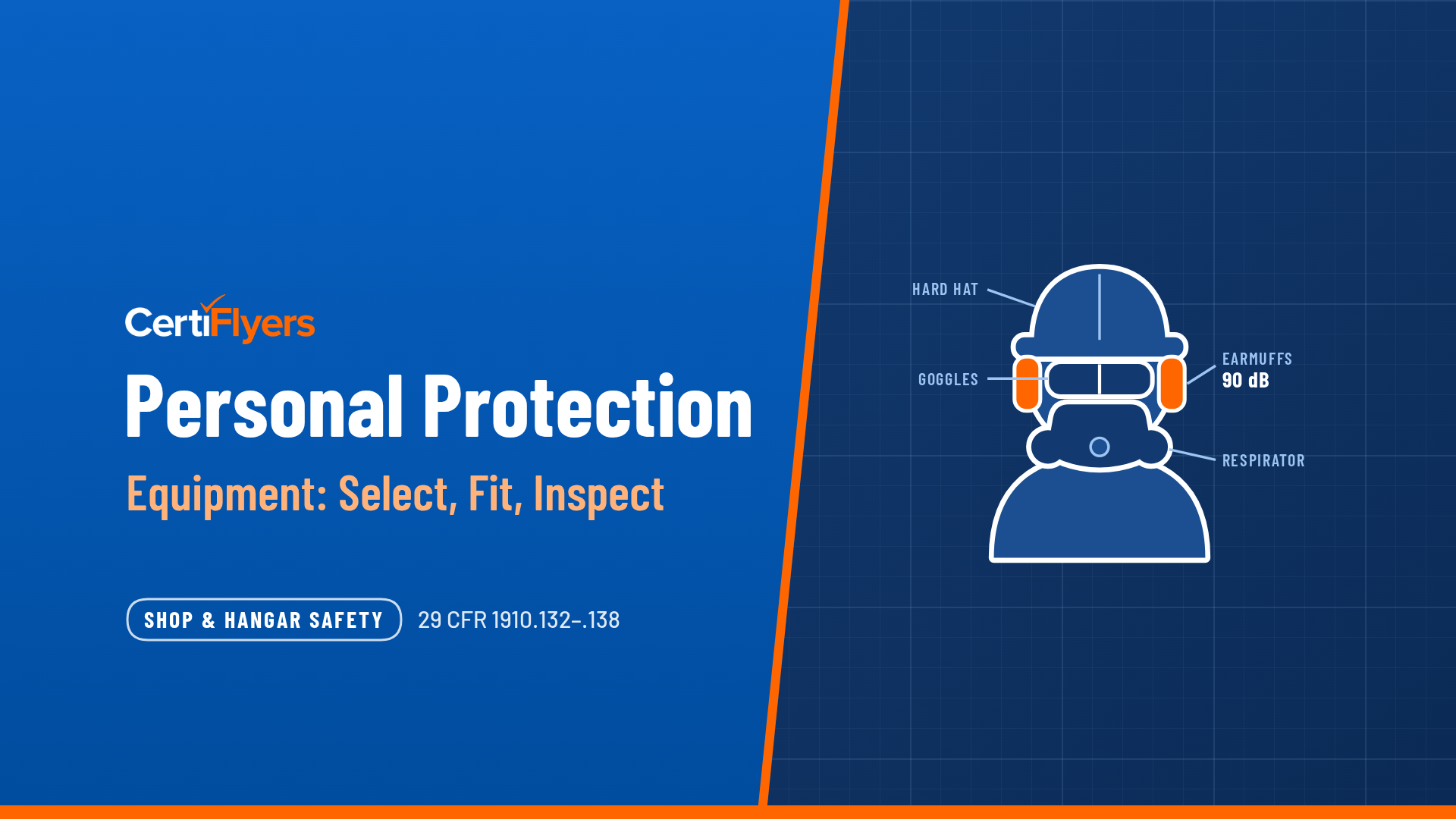
| 90 dB | hearing protection mandatory above this for an 8-hour shift |
| 115 dB | mandatory above this for 15 minutes — engine runs routinely exceed it |
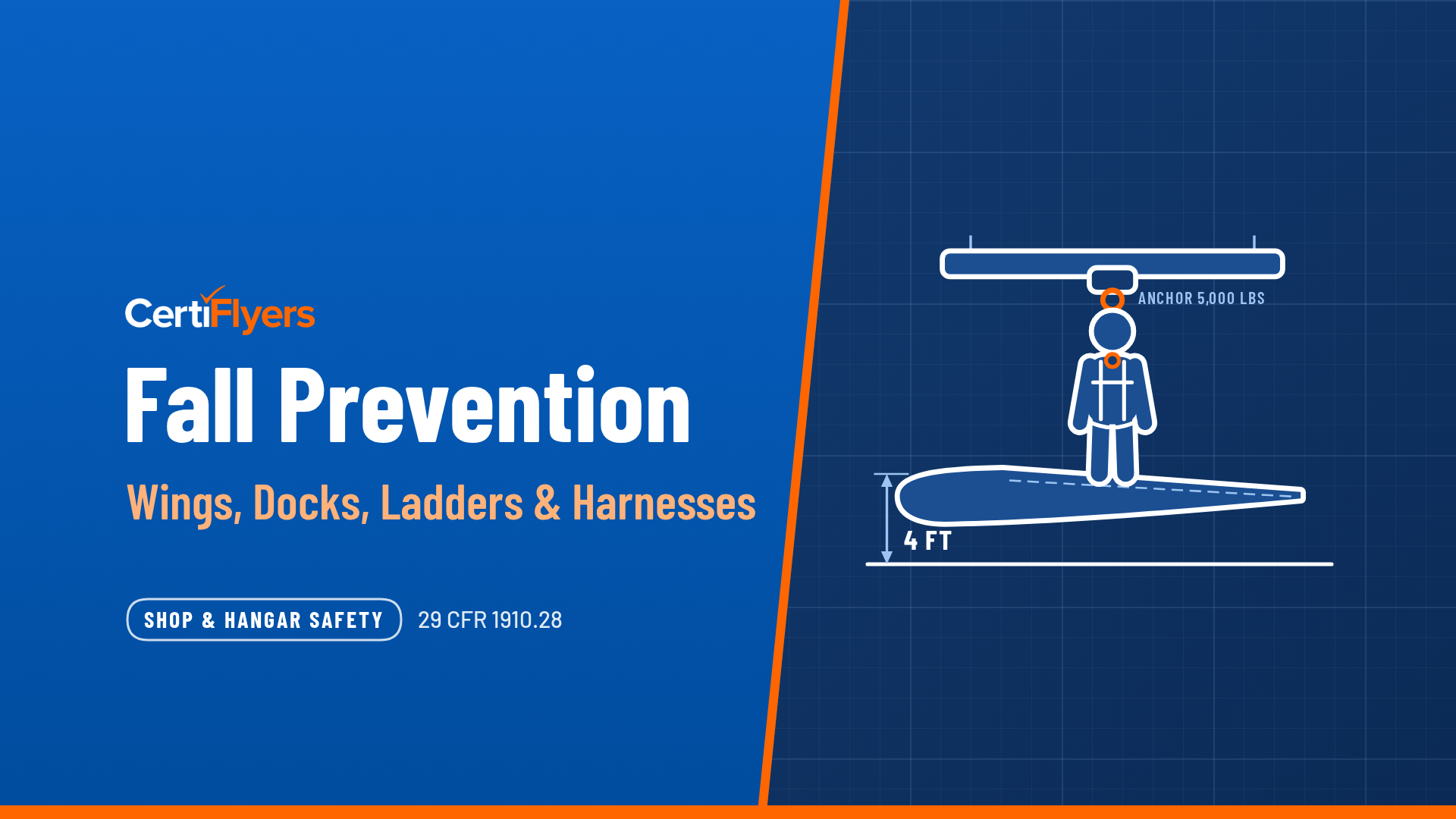
| 5,000 pounds | minimum PFAS anchor rating per attached employee (29 CFR 1910.140) |
| four feet | unprotected side or edge this high or more above a lower level — fall protection required (29 CFR 1910.28(b)(1)) |
| 14 feet | DFW 2015 — a 30-year mechanic died closing a 767 door |
Unlocks when you pass this course
BUILT ONThe standards behind it
- 29 CFR 1910.132General PPE requirements: when PPE must be used, safe design and construction, the hazard assessment of 1910.132(d) and removal of defective or damaged PPE from service.
- 29 CFR 1910.133 and 1910.135Eye and face protection, including the marking that identifies the manufacturer, and head protection.
- ANSI/ISEA Z87.1 and Z89.1Consensus standards of ANSI and the International Safety Equipment Association (ISEA) for safety eyewear (the Z87 mark) and hard hats (Classes G, E and C).
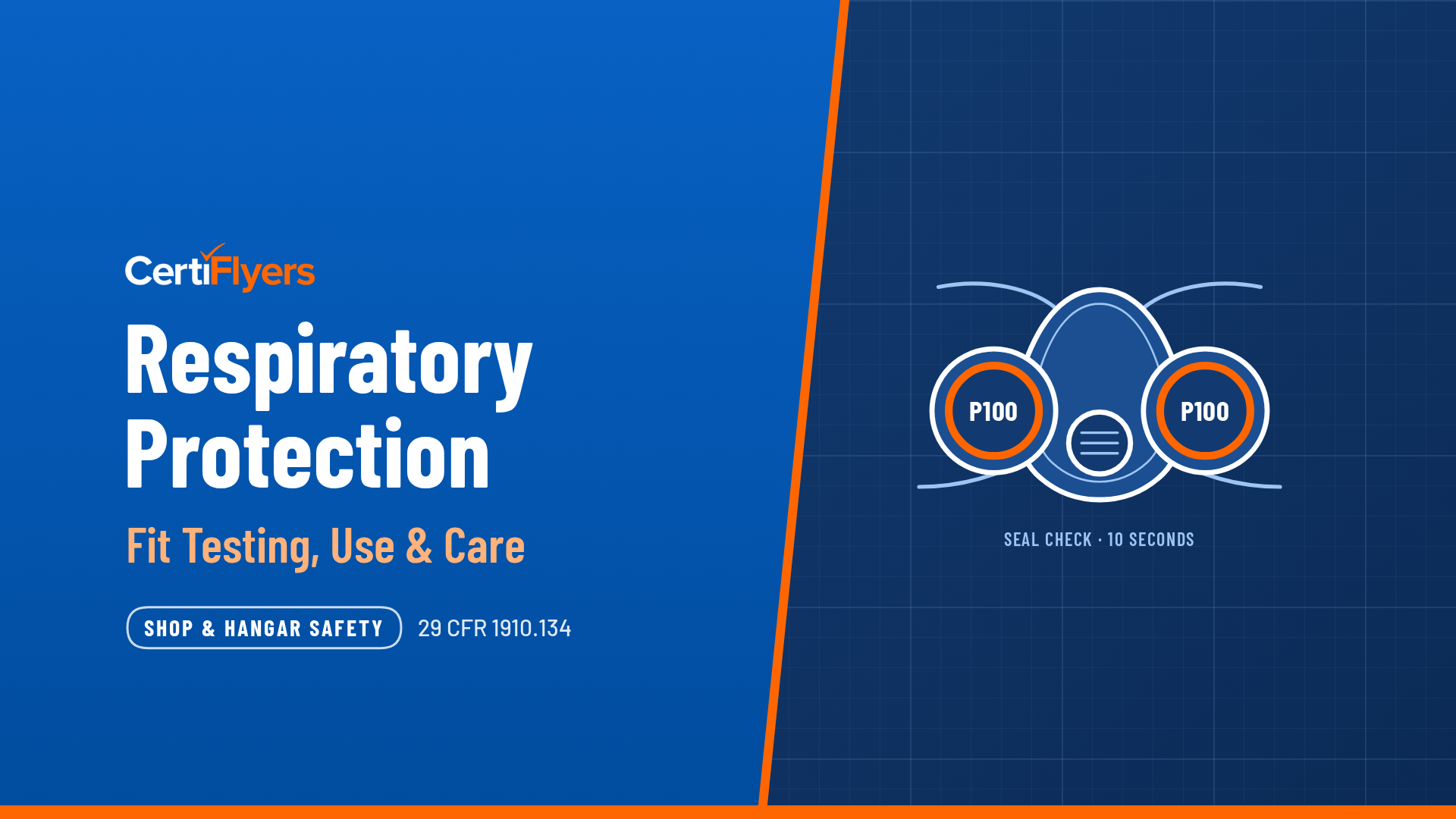
- 29 CFR 1910.134 and 1910.138Respiratory protection, including annual fit testing and seal checks, and hand protection matched to the chemical handled.
- 29 CFR 1910.140 and 1910.28(b)(1)Personal fall protection systems, the 5,000-pound anchor and the body belt prohibition, and fall protection at unprotected edges four feet or more above a lower level.
- 29 CFR 1910.95Hearing conservation: the 85 dBA (A-weighted decibel) 8-hour action level for the hearing conservation program, and the 90 dB / 8-hour and 115 dB / 15-minute permissible exposure limits.
QUESTIONSWhat technicians ask first
- Who is this course for?
- Aircraft maintenance technicians (AMTs) and apprentice mechanics. It assumes a basic hangar safety induction and familiarity with standard aircraft maintenance environments.
- Can I keep using PPE that is only slightly damaged?
- No. Under 29 CFR 1910.132(e), defective or damaged PPE found during inspection must be removed from service immediately and never used. Check every item for holes, cracks, tears and degraded material before the task, because compromised gear can mean direct exposure to the hazard.
- What are the hard hat classes, and what is a bump cap?
- Under ANSI Z89.1, Class G (General) hard hats give limited voltage protection, tested at 2,200 volts, and are standard for most aircraft maintenance tasks; Class E (Electrical) is tested at 20,000 volts. Class C (Conductive) gives impact protection only, with no electrical protection. Bump caps are for low-clearance areas only: they are not ANSI Z89.1 hard hats and not for falling object hazards.
- How do I fit earplugs and earmuffs?
- Roll foam earplugs tightly, insert them into the ear canal and let them expand into a self-forming seal. Earmuffs must clear safety glasses frames and facial hair, and the Noise Reduction Rating (NRR) on the label states how much noise they attenuate.
- Which glove do I use for which chemical?
- No single glove suits all aviation chemicals: butyl for highly corrosive acids and ketones, nitrile for oils, greases and chlorinated solvents. Before use, check for cuts or stiffness, then fill the glove with water and roll the cuff toward the fingers to reveal pinhole leaks.
- When is fall protection required?
- Under 29 CFR 1910.28(b)(1), on any walking-working surface with an unprotected side or edge four feet or more above a lower level, by a guardrail, safety net or personal fall protection system meeting 29 CFR 1910.140. The course case is the 2015 death of a 30-year American Airlines maintenance technician who fell about 14 feet from a jet bridge at Dallas/Fort Worth International Airport while closing and locking the door of a Boeing 767.