Maintenance & Repair Practices
Leak Detection & Repair
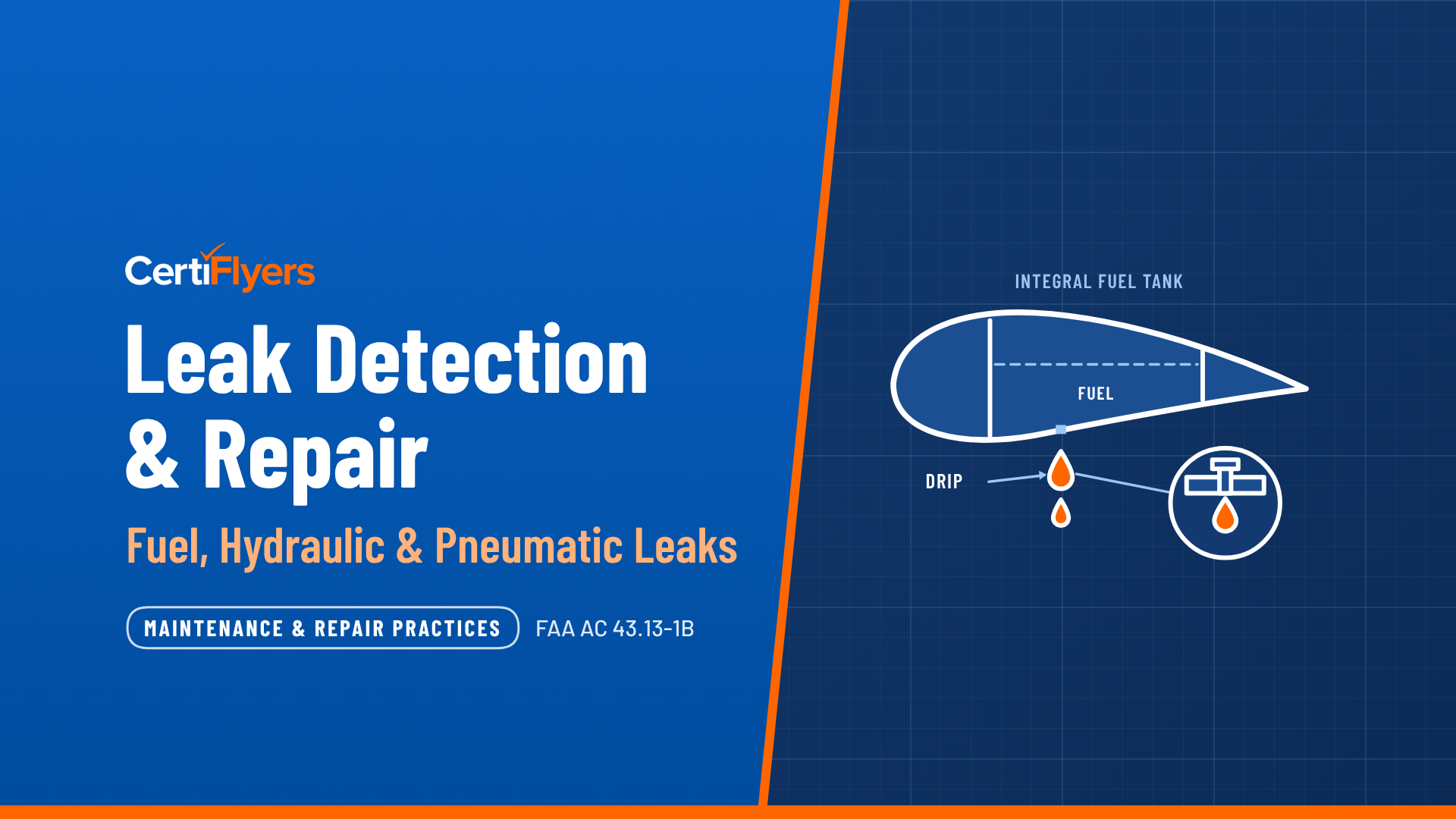
Fuel shows where it exits, not where it leaks: repair the origin.
THE 3 MODULESOne at a time, video and slides
- Classify and make safe Fuel System Leak Classification and Safety Protocols.
- Find the true source Advanced Leak Detection Methodologies.
- Seal to specification Fuel System Sealant Application and Fastener Repair.
YOU'LL BE ABLE TO4 things, on the job
- Classify fuel leaks.
- Enter fuel tanks safely.
- Trace leaks to origin.
- Reseal to specification.
TEST YOURSELFA question from module 1
Fuel drips from a fastener on the lower wing skin of an integral tank, and the aircraft is due out in two hours. What is the right course of action?
A Seal the wet fastener from outside and release the aircraft, since the drip has stopped.
Not quite. External cosmetic repairs fail because fuel channels to the next least restrictive exit point; the internal source must be found and repaired.
B Ground it as a running leak and trace the leak path to its origin inside the tank.
Right. A running leak grounds the aircraft until it is repaired, and the leak is traced to its true origin rather than the visible exit point.
C Monitor it for a few flights, because a drip on the outer skin is in an open area.
Not quite. Only minor external leaks within the manufacturer's limits may be monitored; a running leak grounds the aircraft.
D Replace the fastener under the drip, because the visible exit point is the leak source.
Not quite. Fuel travels along structure before it becomes visible, so the wet spot is the exit point, not the source.
Stuck? In the course, Crew Chief, your AI tutor, explains it.
HANGAR CARDUnlocks when you pass
A running leak grounds the aircraft; repair the origin, not the exit point.
| Number | What it means |
|---|---|
| 30 minutes | after wiping dry — the wetted area formed in this time sets the class |
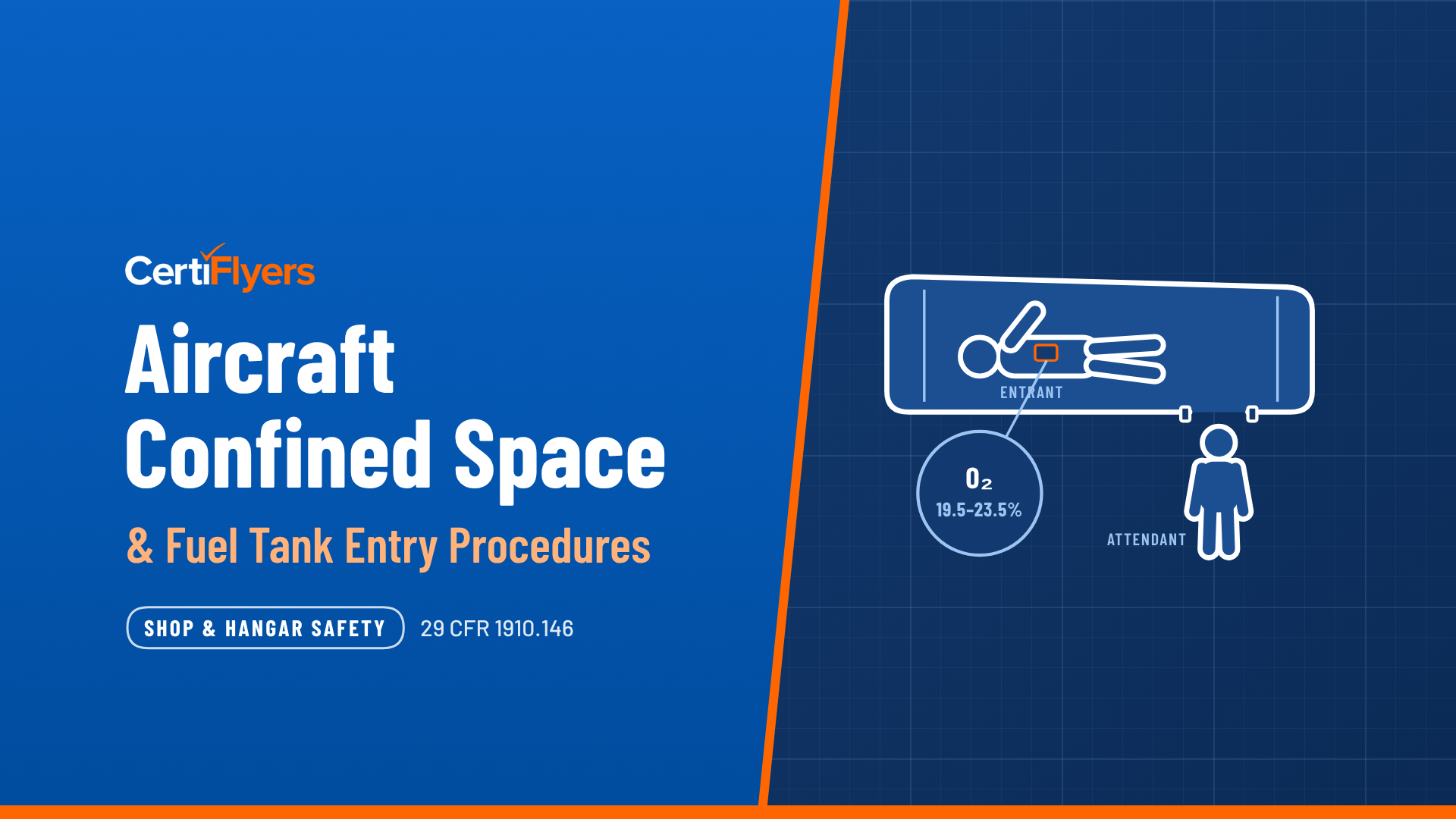
| 19.5%–23.5% | oxygen range for tank entry — tested first, before LEL and toxics |
| < 10% LEL | flammable vapor limit in the tank atmosphere, tested second |
| 10⁻⁹ | mbar·l/s — order of the best helium sniffer sensitivity (field: about 10⁻⁷) |
| A · B · C | sealant classes: brushable topcoat · fillet paste · faying surface |
| §25.981 | fuel tank explosion prevention — a repair must not defeat any CDCCL |
Unlocks when you pass this course
BUILT ONThe standards behind it
- 14 CFR Part 25 (§25.981)Fuel tank explosion prevention: the type design includes Critical Design Configuration Control Limitations (CDCCLs), which a leak repair must never defeat.
- 14 CFR §43.13(a) and §43.16Maintenance follows the manufacturer's manual or other acceptable methods; Airworthiness Limitations items, CDCCLs included, are done in accordance with that section.
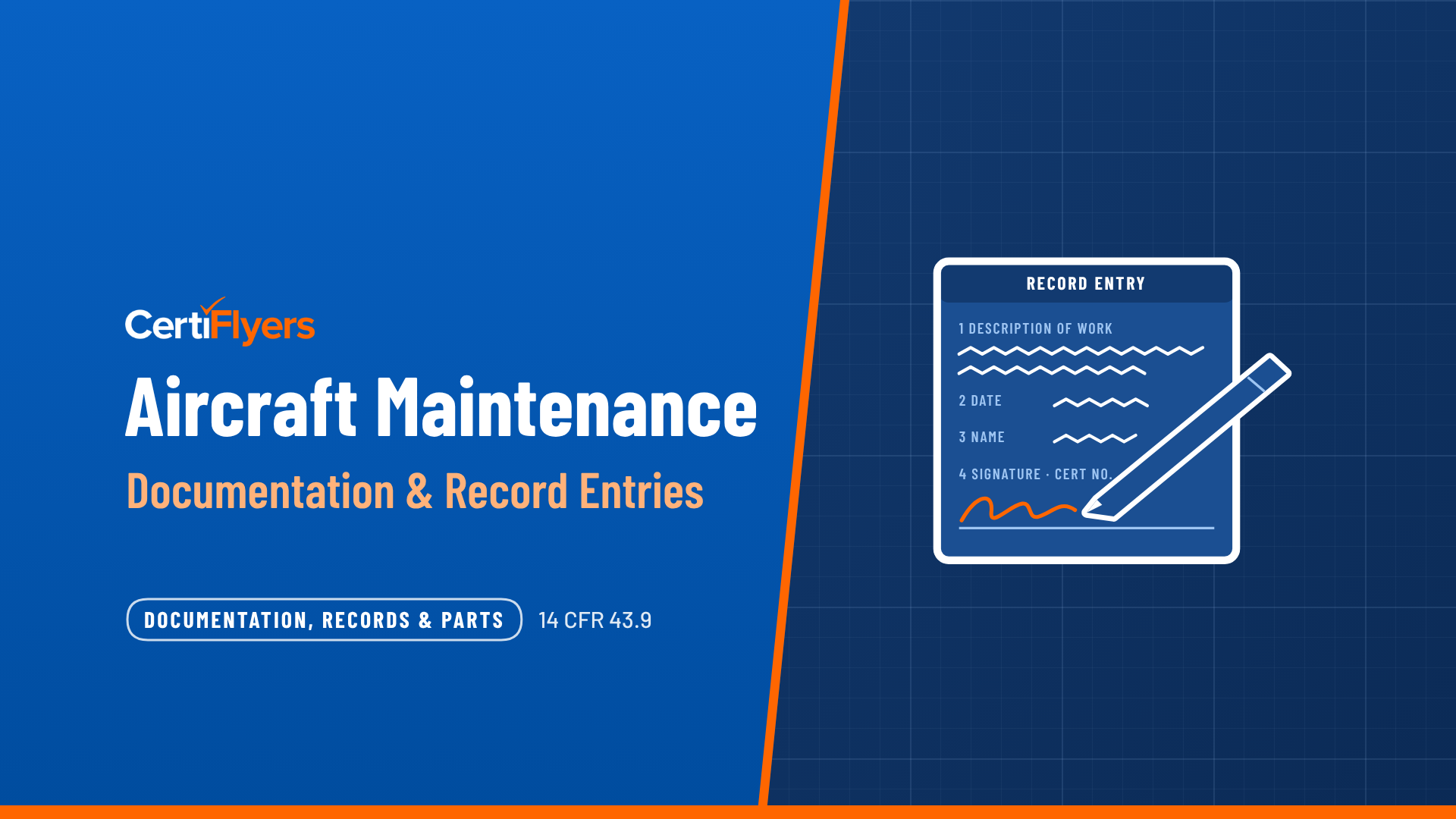
- 14 CFR §43.9The record entry: a description of the work, the completion date, the name, and the approving signature, certificate number and kind of certificate.
- FAA AC 43.13-1B, Chapter 8 Section 2Guidance, not regulation: the basic fuel system leak checks, used only when no manufacturer instructions exist.
- FAA-H-8083-31B, Chapter 14Guidance: the stain, seep, heavy seep and running leak classes, and repair before flight of any leak where vapors can collect.
- 29 CFR §1910.146Occupational Safety and Health Administration (OSHA) permit spaces: atmosphere tested for oxygen, flammables, then toxics before entry, and monitored during it.
QUESTIONSWhat technicians ask first
Who is this course for?
Airframe and powerplant maintenance technicians and mechanics who find and repair fuel and fluid leaks, especially in integral fuel tanks. You should already know basic aircraft fluid, pneumatic and environmental control systems, basic nondestructive testing concepts and aircraft sealant applications.
How is a fuel leak classified?
By the size of the fuel-wetted area it forms within 30 minutes of wiping the area dry: under ¾ inch is a stain, ¾ to 1½ inches a seep, 1½ to 4 inches a heavy seep, and a running leak pools and drips from the aircraft. The aircraft's maintenance manual sets the limits that apply.
Which leaks ground the aircraft?
A running leak grounds the aircraft until it is repaired, and so does any leak into an area where vapors can collect, such as a dry bay or a wing leading edge. Stains, seeps and heavy seeps in open areas may be allowed within the manual's limits, with the source monitored.
Can I just seal the wet spot on the outside of the wing?
Not as a permanent repair. Fuel channels to the next least restrictive exit point, so the internal source must be found and repaired. A temporary external repair may be applied when the source cannot be found quickly, but the permanent internal repair is made when the tank is next opened.
What has to happen before anyone enters a fuel tank?
Defuel and isolate the tank, lock out and tag out the fuel pump, fuel quantity and adjacent circuits, ground the aircraft and bond the equipment. A qualified person tests oxygen, then flammable vapors, then toxics; purge and ventilate, test again before entry, keep monitoring, and station a trained standby attendant outside.
Can I use a different sealant if the specified one is not in stock?
No. The manufacturer's structural repair manual or maintenance manual specifies the exact sealant. Substituting an unapproved sealant compromises the tank boundary and renders the repair unairworthy.
Classify the Leak
12 cards from the course, about 3 minutes. A taste of the lesson before you start.