Human Factors & Professional Skills
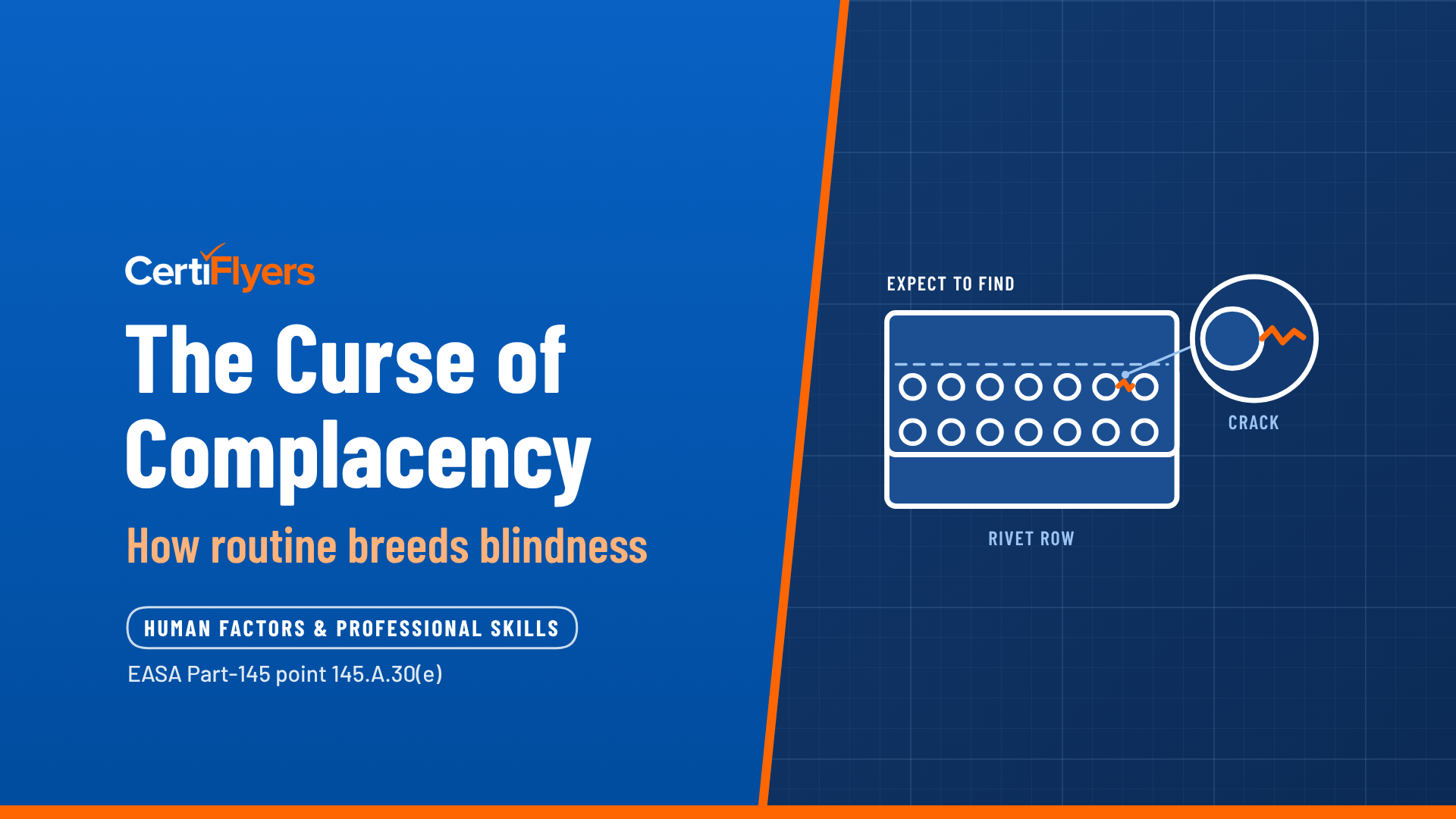
The Curse of Complacency
Expect to find the fault; sign only what you have verified.
THE 4 MODULESOne at a time, video and slides
- Routine breeds blindness Routine Breeds Blindness: Expectation and the Clean History.
- Spotting the warning signs Spotting the Warning Signs That You Have Stopped Seeing.
- Expect-to-find inspection Inspect as If the Fault Is There.
- Procedure, signature, independent check Work the Procedure and Sign Only What You Verified.
YOU'LL BE ABLE TO4 things, on the job
- Explain how routine blinds.
- Recognize complacency warning signs.
- Perform an attention reset.
- Sign only verified work.
TEST YOURSELFA question from module 3
You have checked the same panel every night for years and never found a fault. Tonight it is on your task card again. What does the course tell you to do?
A Glance at it and sign, since it has never been faulty.
Not quite. A clean history proves only that the method, as performed, found nothing; even if rare, a fault may exist.
B Inspect it as if the fault is there, with the task card open.
Right. FAA-H-8083-30B Chapter 14 tells technicians to expect to find the fault that created the inspection item in the first place.
C Skip it tonight and inspect it more carefully next time.
Not quite. An item must never be assumed acceptable when it has not been inspected.
D Ask a colleague who has also never found a fault to sign for it.
Not quite. Under 14 CFR §43.9(a)(4), the signature is the approval for return to service only for the work performed.
Stuck? In the course, Crew Chief, your AI tutor, explains it.
HANGAR CARDUnlocks when you pass
Expect to find the fault; sign only what you have verified.
| Number | What it means |
|---|---|
| three steps | Go back this far in the procedure after a distraction |
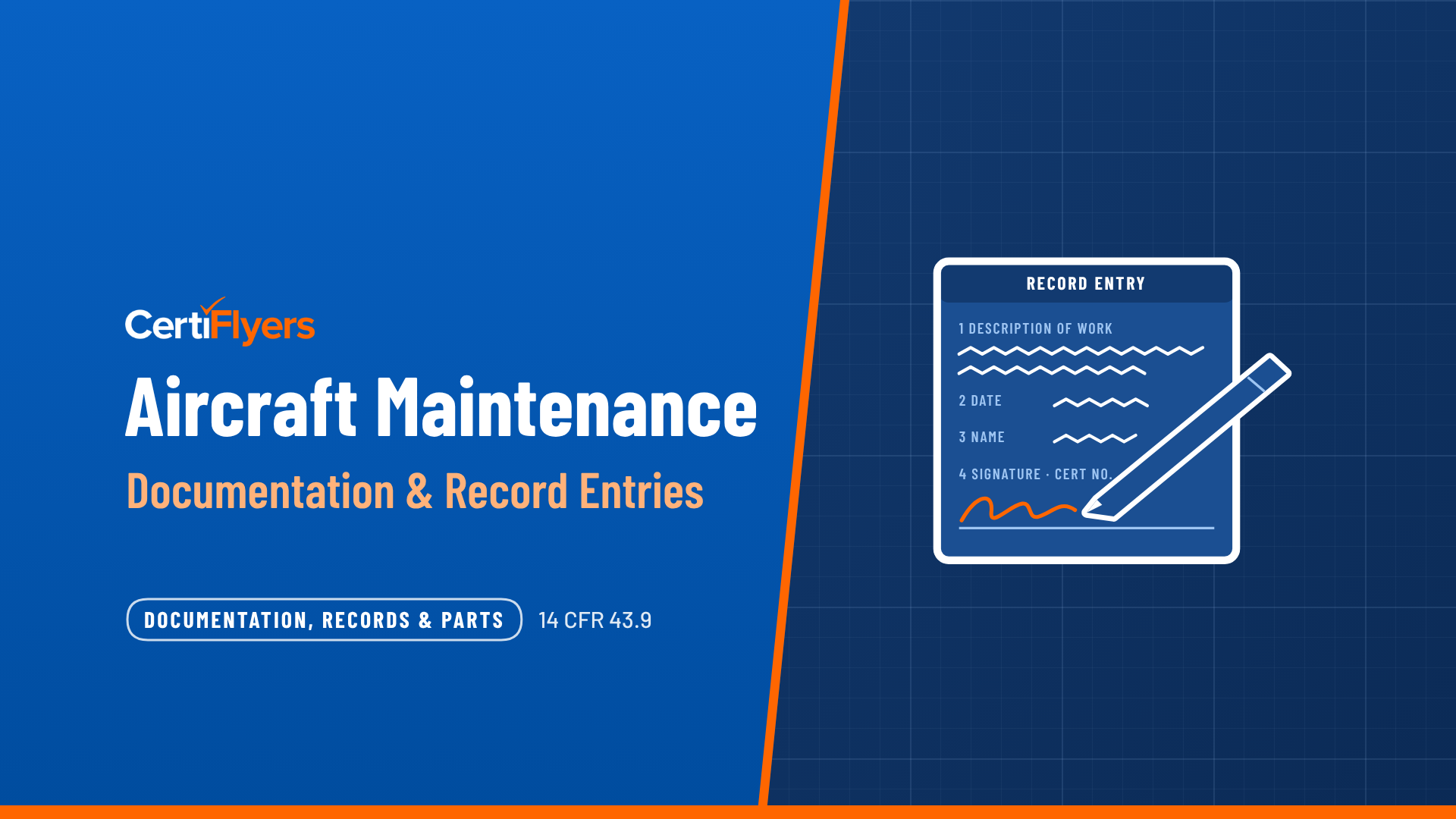
| §43.9(a)(4) | 14 CFR rule: the signature approves only the work performed |
| §43.13(a) | 14 CFR rule: use the prescribed or acceptable methods |
| §121.371(c) | 14 CFR rule: no required inspection of your own work |
| 145.A.30(e) | European Union Aviation Safety Agency (EASA) Part-145 point: human factors competency |
| 4.15 | EASA guidance item: Repetitive tasks/complacency |
Unlocks when you pass this course
BUILT ONThe standards behind it
- EASA Part-145 point 145.A.30(e)The rule: personnel competency must include an understanding of human factors and human performance issues.
- EASA GM1 145.A.30(e)Guidance syllabus listing item 4.15 "Repetitive tasks/complacency," item 6.3 on norms and item 6.5 on error-capturing methods.
- FAA AC 120-72A, Maintenance Human Factors TrainingGuidance listing complacency in the Dirty Dozen; paragraph 8.1 states that no FAA regulation mandates specific maintenance human factors training content.
- FAA-H-8083-30B Chapter 14, Human FactorsDefinitions of complacency and norms, their warning signs, and countermeasures such as expect-to-find inspection and sign-off discipline.
- 14 CFR §43.9(a) and 14 CFR §43.13(a)What a signature approves, and the methods each person performing maintenance must use.
- 14 CFR §121.369(b) and 14 CFR §121.371Required inspection items and independent inspection for 14 CFR Part 121 certificate holders.
QUESTIONSWhat technicians ask first
Who is this course for?
All maintenance staff whose work leads to an airworthiness decision: aviation maintenance technicians and licensed engineers, inspectors and quality staff, apprentices, supervisors, and support staff in stores, planning and technical records. There is no formal prerequisite.
Does a Federal Aviation Administration (FAA) regulation require complacency training?
No. Advisory Circular (AC) 120-72A paragraph 8.1 states that no FAA regulation mandates specific maintenance human factors training content. AC 120-72A is guidance and lists complacency among the Dirty Dozen. 14 CFR §145.163 requires an approved repair station training program but does not mention human factors.
What does EASA Part-145 require?
European Union Aviation Safety Agency (EASA) Part-145 point 145.A.30(e) requires that personnel competency include an understanding of human factors and human performance issues. The complacency item, item 4.15 "Repetitive tasks/complacency," is in guidance material GM1 145.A.30(e), not in the rule.
I am experienced. Is complacency really my problem?
Yes. The Federal Aviation Administration (FAA) Safety Team defines complacency as "Overconfidence from repeated experience performing a task," and FAA-H-8083-30B Chapter 14 says it typically develops over time as experience brings false confidence. That makes it a hazard for the most proficient people on the floor.
What should I do when I am interrupted?
Go back three steps in the work procedure when you resume, as FAA-H-8083-30B Chapter 14 advises. Mark or tag incomplete work, make an open record entry for each open item, and confirm the aircraft identity against the work order before you touch anything on return.
Does a buddy check stop complacency?
Only if it is a real, independent verification. At London Heathrow in 2013, two technicians checked each other's latches on the wrong aircraft. The course teaches that the checker verifies the item against the approved data, on the aircraft named in the paperwork, and takes no part in deciding which steps to skip.
Stop or Start?
10 cards from the course, about 4 minutes. A taste of the lesson before you start.