Human Factors & Professional Skills
Human Factors Primer
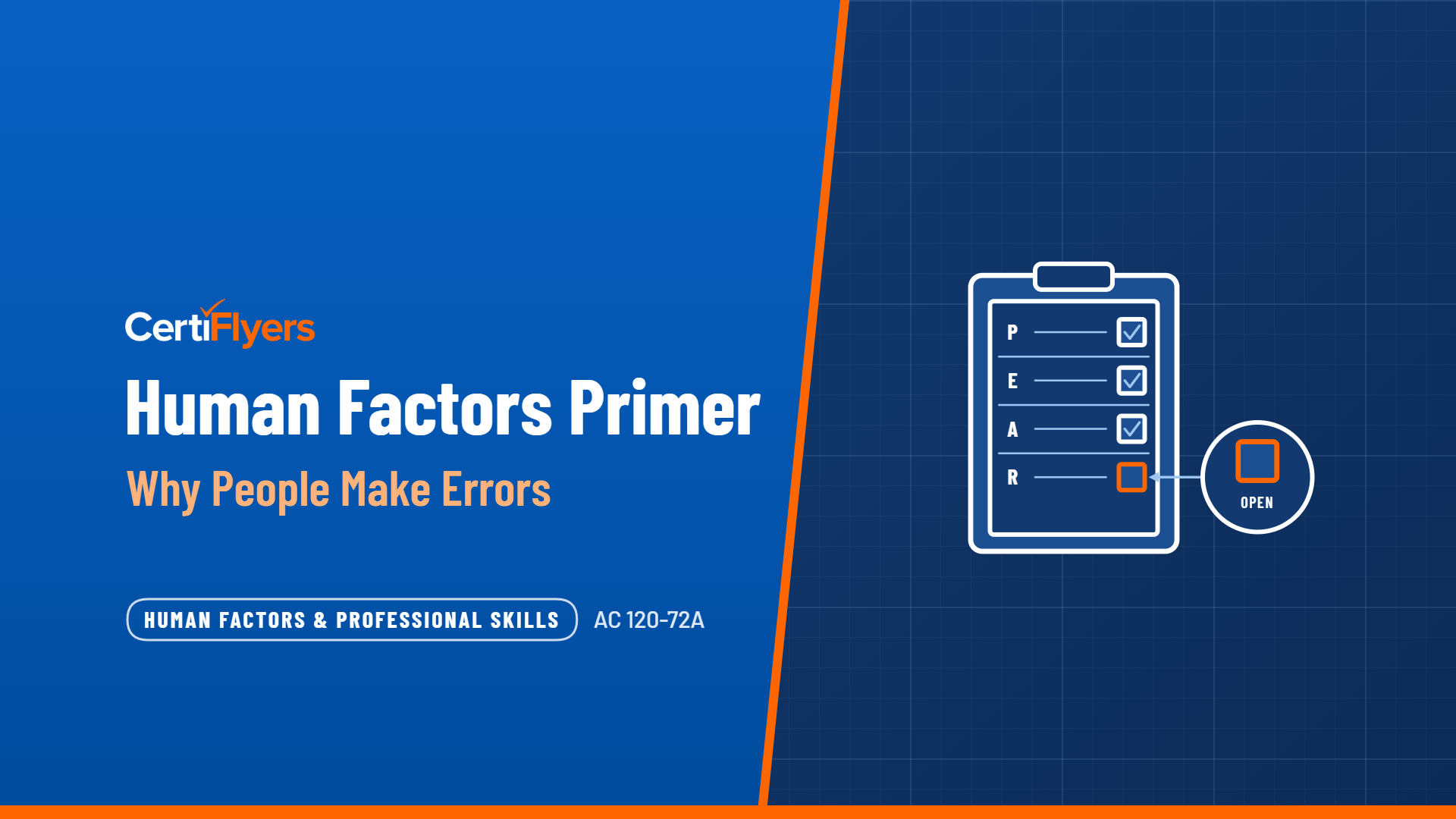
Awareness before action: run a PEAR check before every safety-critical task.
THE 3 MODULESOne at a time, video and slides
- Awareness before action The PEAR Model.
- Discipline beats speed Mitigating Installation and Maintenance Errors.
- Continuity is airworthiness Shift Turnover and Communication.
YOU'LL BE ABLE TO3 things, on the job
- Apply the PEAR model.
- Prevent installation errors.
- Execute structured shift turnovers.
TEST YOURSELFA question from module 1
Late in a shift, a technician is about to replace a component in a dim, noisy corner of the hangar and notices the current-revision manual is not at the aircraft. How does the PEAR model treat this?
A Start the task, since PEAR is reviewed once the work is finished.
Not quite. the four PEAR domains are evaluated before and during every task, not afterward.
B Only the People domain counts; the technician feels fit, so proceed.
Not quite. all four domains must be evaluated, and a fit technician does not make up for a weak Environment or missing Resources.
C Treat the lighting, noise and missing manual as Environment and Resources weaknesses and resolve them before starting.
Right. under the PEAR model a weakness in any one domain is a latent error waiting to surface, and no safety-critical task begins until a deliberate PEAR check has been run.
D Log it as an active error if something goes wrong later.
Not quite. these conditions are latent errors, the upstream conditions, while an active error is the visible event the PEAR check is meant to prevent.
Stuck? In the course, Crew Chief, your AI tutor, explains it.
HANGAR CARDUnlocks when you pass
Distracted, go back three steps; handing over, walk to the work site.
| Number | What it means |
|---|---|
| 80 percent | approximate share of all aviation maintenance errors driven by human factors |
| 20 percent | of general aviation maintenance accidents cite installation errors — the deadliest category |
| 15 percent | of maintenance-related errors are estimated to come from distraction |
| three steps | back in the written procedure when you return from a distraction |
| SA-022 | NTSB Safety Alert — Mechanics: Manage Risks to Ensure Safety |
| 14 people | killed on Continental Express 2574 — screws omitted after a poor handover |
Unlocks when you pass this course
BUILT ONThe standards behind it
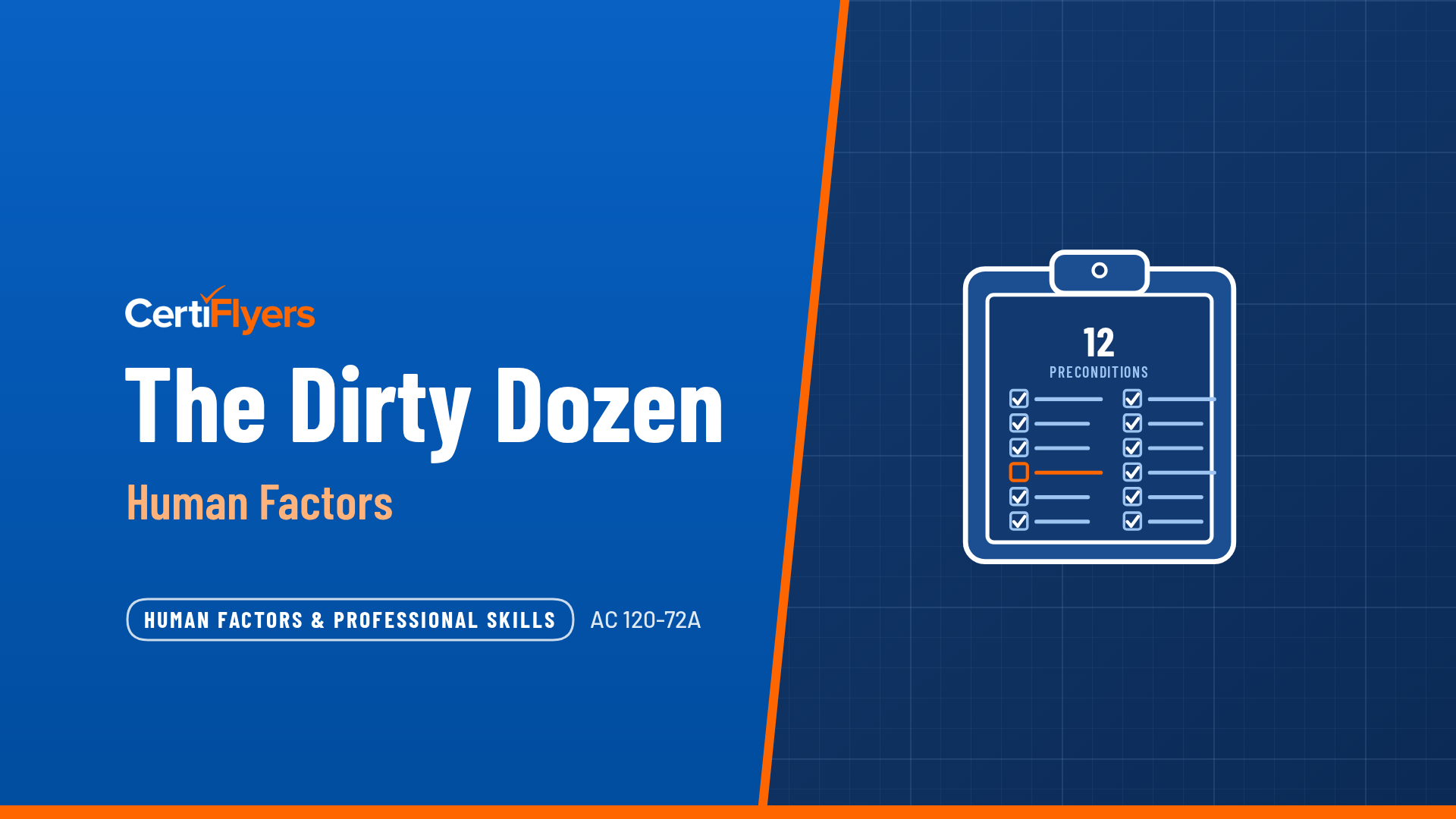
- FAA-H-8083-30, Chapter 14Aviation Maintenance Technician Handbook, General, Human Factors: the primary FAA guidance for human factors awareness, covering the Dirty Dozen and the PEAR model.
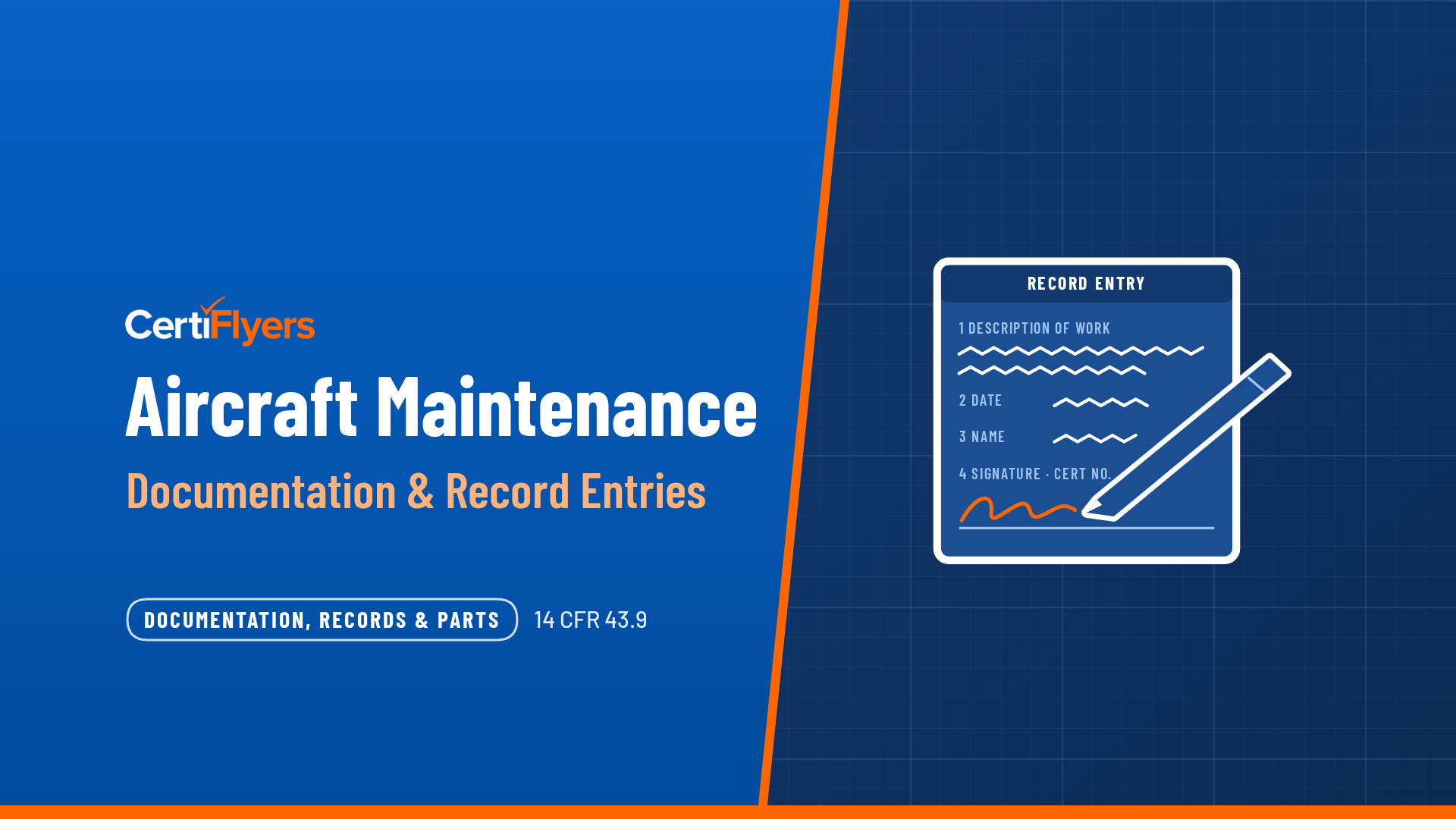
- FAA Advisory Circular (AC) 120-72AMaintenance Human Factors Training: FAA guidance on human factors training programs and error mitigation, used for the shift turnover module.
- FAA Human Factors Guide for Aviation Maintenance and Inspectioncited with AC 120-72A as human factors guidance, and as the source of the PEAR model the course teaches.
- NTSB Safety Alert SA-022Mechanics: Manage Risks to Ensure Safety, the National Transportation Safety Board (NTSB) guidance and accident data on installation errors, distraction and verification.
- BFU report, Lufthansa Airbus A320, Frankfurt, March 20, 2001the German Federal Bureau of Aircraft Accident Investigation (BFU) case of crossed connector pins, the course's reversed-installation example.
- NTSB/AAR-92/04the report on Continental Express Flight 2574 (1991), the course's shift turnover case.
QUESTIONSWhat technicians ask first
- Who is this course for?
- Aviation maintenance technicians (AMTs) and mechanics. You need a valid FAA airframe and powerplant (A&P) certificate or apprentice mechanic status, and basic familiarity with aircraft maintenance manuals (AMM) and job cards.
- What is the PEAR model?
- PEAR stands for People, Environment, Actions and Resources, the four domains to evaluate before and during every task. Each Dirty Dozen factor maps to one or more of these domains, and weakness in any one domain is a latent error waiting to surface. No safety-critical task begins until a deliberate PEAR check has been run.
- What should I do if I'm distracted in the middle of a task?
- Physically mark or tag the incomplete work, and leave any disconnected connectors plainly visible, never resting near the connection point where they look hooked up. When you return, go back three steps in the written procedure and resume from that point.
- Can I work alone when I'm fatigued?
- The course calls working alone when fatigued particularly dangerous. If you recognize fatigue in yourself, avoid complex tasks and ask another AMT to double-check your work.
- What check follows an installation?
- After every installation, regardless of task size, the course calls for an operational functional check or a two-person verification. Separately, a qualified person other than the one who did the maintenance inspects the safety and security of critical items, including components loosened or disconnected for access. The Lufthansa A320 event of March 20, 2001 shows why: crossed pins in an elevator/aileron computer (ELAC) connector reversed the captain's sidestick, and a check made only with the first officer's sidestick masked the error.
- What does an adequate shift turnover include?
- Place a work-in-progress marker at the work site or on the workcard, and write all open items, completed steps and difficulties in the logbook or worksheets before the shift ends. Then walk through the work face to face at the actual location, review the paperwork and signatures together, and use challenge-response so each open item is repeated back. A phone call, text or break-room summary is not an adequate turnover. On Continental Express Flight 2574 in 1991, inadequate shift handover communication left screws missing from the horizontal stabilizer, and all 14 people on board were killed when the aircraft broke up in flight.